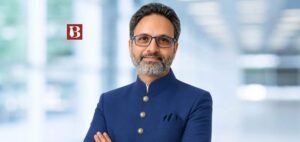
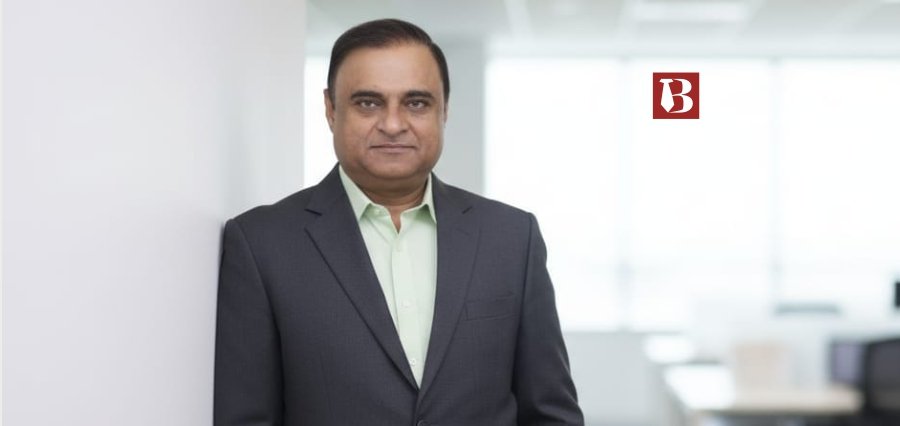
In today’s competitive environment, where power distribution companies have been compelled to restructure themselves at a breakneck pace, Brajesh Kumar, Chief Executive Officer of RPSG Group’s Chandigarh Power Distribution Limited (CPDL), emerges as a leader who considers change an opportunity, rather than a challenge. Through his extensive experience in the fields of power generation, infrastructure development, telecoms, and renewable energy, Kumar has developed his unique style of leadership characterized by flexibility, resilience, and a strong dedication to purpose-oriented growth. As he leads CPDL in the current era of digitalization and high consumer demand, Kumar’s leadership philosophy is being tested like never before.
A Journey Shaped by Transformation, not a Single Moment
But when pressed to identify one particular turning point in his development as a leader, Kumar finds fault with the entire premise of the question. The lessons that he has learned during his career have been gained not through one particular experience, but rather from many different experiences, each teaching him the value of being prepared for change and working with people from different backgrounds.
Indeed, much of his learning came about through leading organizations through the times of drastic transformations: upgrading of technologies, management of extensive construction projects, navigating a constantly changing legislative environment. This has taught him that true success is achieved only by those who anticipate disruption and not merely react to it. Just as important was his experience with multidisciplinary teams comprised of people from various functional departments, which instilled in him the belief that great solutions are born of great environments of trust, empowerment and accountability. As he puts it plainly, “Leadership is not about having all the answers; it is about enabling others to perform at their highest potential.”
That philosophy goes with him to his present position. The power industry, according to him, has been transformed due to digitalization, smart meters, environmental necessities, and customers who demand much higher levels of responsiveness from utilities companies than those utilities used to provide. What he aims to achieve at CPDL is to create what he calls a “future-ready utility” – an organization that successfully combines efficiency with innovation and a true customer-centric approach. Leadership success could not be measured only in terms of financial performance, according to Kumar.
Leading on a Foundation of Trust, Empowerment, and Accountability
If there is a single framework that defines how Kumar operates as a leader, it is the trio of trust, empowerment, and accountability- three principles he returns to repeatedly when describing his management philosophy. Trust, in his view, is not built through grand gestures but through the daily discipline of transparency and consistency. Leaders, he argues, must communicate openly, listen actively, and model the behaviour they expect from others. It is only when people understand not just what they are being asked to do, but why it matters, that they commit fully to the outcome.
Empowerment follows naturally from that foundation. He gives his teams the autonomy to make decisions, paired with the resources and support needed to act on them, and he actively encourages people to challenge conventional thinking and experiment responsibly. But empowerment without accountability, he is careful to note, is incomplete. High-performing organizations, in his experience, are built where expectations are unambiguous, performance is measurable, and every individual can trace a clear line between their own contribution and the organisation’s broader mission.
This balance matters more than ever at CPDL, where the energy sector’s rapid embrace of digitalisation, artificial intelligence, and smart metering demands a workforce that is not just technically capable but genuinely agile. He sees his role less as managing a business in the conventional sense and more as cultivating leaders at every level of the organisation because, as he explains it, an empowered and purpose-driven workforce does not merely hit targets. It creates lasting value.
Decision-Making Anchored in Purpose, Data, and Integrity
Few responsibilities test a CEO more directly than decision-making under uncertainty, and Kumar has developed a disciplined, four-part framework for navigating exactly that terrain. The first principle is that every decision must be anchored in long-term value creation rather than short-term pressure. While immediate demands are inevitable, he insists on evaluating choices through the lens of strategic objectives, customer interests, and sustainability, trusting that decisions built for durability tend to prove themselves correct over time.
The second principle balances data with judgment. Kumar is emphatic that today’s leaders have access to more information than any generation before them, yet he is equally clear that not every decision can wait for perfect data. As he states, “Indecision often carries greater risk than a well-informed decision taken at the right time.” That conviction shapes how he approaches ambiguity: analyse what is available, assess risk honestly, and then act with conviction rather than delay.
Collaboration forms the third pillar of his approach. He is a firm believer that complex problems rarely yield to single-dimensional thinking, and he makes a deliberate practice of drawing in diverse perspectives from colleagues, subject-matter experts, and stakeholders before finalising major decisions. That habit, he notes, does more than improve decision quality it builds the ownership and organisational alignment needed to execute effectively once a decision is made.
The fourth and non-negotiable principle is integrity. Every decision, in his framework, must uphold the highest standards of ethics, governance, and transparency, because trust once eroded is exceedingly difficult to rebuild. At CPDL, where digital transformation, smart metering expansion, and operational efficiency initiatives are all underway simultaneously, he sees his job less as eliminating uncertainty and more as providing clarity within it: asking the right questions, deciding with courage, learning quickly, and giving the organisation the confidence to move forward together.
Building Talent that can Carry the Organization Forward
Kumar speaks with particular conviction on the subject of talent, and it is clear the topic sits close to the centre of his leadership philosophy. He is unambiguous that people, not capital or technology, represent an organisation’s most durable competitive advantage everything else, he notes, can eventually be acquired. His approach to identifying talent goes beyond technical competence to prioritise curiosity, integrity, adaptability, and a genuine hunger to learn, qualities he considers just as predictive of future performance as prior experience.
Nurturing that talent, in his view, requires building an ecosystem of continuous learning: structured development programmes, cross-functional exposure, active mentoring, and the chance to lead genuinely challenging assignments. He has observed repeatedly that when people are entrusted with meaningful responsibility and given room to make real decisions, they build confidence and leadership capability far faster than through formal training alone.
On the subject of retention, he offers a view that runs counter to conventional wisdom: compensation, while important, is rarely the deciding factor. People remain, he argues, where they feel respected, where their contributions are recognised, and where a credible path for growth is visible. That belief extends naturally into how he thinks about innovation which, in his telling, flourishes only in cultures where employees feel psychologically safe enough to question existing practices without fear of repercussion. At the same time, he is careful to pair that openness with discipline, insisting that experimentation must ultimately translate into measurable value rather than novelty for its own sake.
His view of accountability closes the loop: clear expectations, defined outcomes, and genuine ownership, reinforced through trust and regular feedback rather than top-down enforcement. It is a philosophy he distills into one of the more memorable statements of his career: “For me, leadership is not measured by the number of followers a leader has, but by the number of leaders they help create,” he declares
Values as the Anchor of Every Decision
For Kumar, leadership has never been a purely transactional exercise measured in financial or operational outcomes alone. He speaks candidly about the role that personal values, such as integrity, accountability, respect for people, continuous learning, and a commitment to excellence have played across every organisation and every role he has held. These are not principles displayed on a wall for him; they are, in his description, standards that must show up consistently in daily decisions and everyday culture.
Maintaining alignment between his personal values and an organisation’s broader mission, he explains, begins with genuinely understanding not just what an organisation is trying to achieve, but why that goal matters to the people it touches customers, employees, shareholders, and the communities it serves. At CPDL, that mission extends well beyond the distribution of electricity. He frames the company’s purpose as building a smarter, more reliable, digitally enabled utility that contributes meaningfully to Chandigarh’s sustainable urban development a purpose he says resonates directly with his own conviction that leadership must create value for society, not merely for shareholders.
He also credits ongoing dialogue and self-reflection with keeping that alignment intact, describing a habit of actively seeking feedback and remaining willing to question his own assumptions. Ultimately, his view of trust is built on consistency between word and action, particularly during the difficult decisions that test a leader’s character most directly. When vision is combined with integrity, and ambition with humility, he believes, organizations develop cultures where people are inspired to contribute their best not because they are required to, but because they choose to.
Leading Through Adversity
Every accomplished leader carries scars from genuine adversity, and Kumar is candid about the fact that his leadership has been tested far more during periods of disruption than during stability. He points to large-scale organisational transformation as among his most defining professional challenges, not because the technology itself was difficult to implement, but because helping people embrace change with genuine confidence proved to be the harder task.
He has learned that transformation inevitably breeds uncertainty: employees naturally worry about new processes, shifting roles, and unfamiliar tools. His response has been to prioritize clarity, transparent communication, and visibility during exactly those moments, on the conviction that people adapt far more readily to change when they understand its purpose and feel like participants in the journey rather than passive recipients of it.
He also speaks to the importance of composure under pressure, the discipline of making difficult calls with incomplete information while still maintaining the confidence of employees, customers, and regulators alike. Remaining calm, listening carefully, and grounding decisions in facts rather than emotion, he has found, produces better outcomes and inspires confidence throughout an organisation.
Perhaps counterintuitively, he also credits adversity with accelerating innovation, noting that constraints often push teams toward creative solutions that would never have surfaced under ordinary circumstances. These lessons continue to inform how he leads CPDL through its own digital transformation today, reinforcing his conviction that resilience, transparency, and a people-first approach are the foundations on which enduring success is built.
Distinguishing Leadership from Management
Asked to draw the line between an effective manager and an exceptional leader, Kumar offers a distinction that runs through much of his broader philosophy: managers ensure systems and processes run efficiently, while leaders create vision, inspire confidence, and empower people to reach outcomes that once seemed out of reach. In an environment where technology, sustainability, and customer expectations are all shifting simultaneously, he believes organizations increasingly need leaders capable of providing clarity amid genuine complexity.
He identifies integrity, continuous learning, innovation, and the courage to make difficult calls- tempered by empathy and accessibility as the defining traits of exceptional leadership. He has worked deliberately to cultivate these qualities in himself by staying curious across every industry he has touched, from power distribution to telecommunications to renewable energy, and by treating listening as a genuine leadership discipline rather than a formality. Humility, he adds, is essential in an era of rapid change, since no leader today can credibly claim to have all the answers. That distinction between managing outcomes and building legacy is one he returns to often: “Effective managers deliver results, but exceptional leaders create a legacy.”
Innovation Without Compromising Discipline
Innovation and operational discipline are frequently framed as being in tension. Still, Brajesh rejects that framing outright, arguing that the two are, in fact, complementary, particularly in a sector like power distribution, where uninterrupted service and public trust leave little room for error. Creating a culture where new ideas are welcomed, he explains, begins at the leadership level: people need genuine confidence that their ideas will be evaluated on merit rather than hierarchy.
At the same time, he insists that innovation must operate within a structured framework assessed for feasibility, customer impact, and strategic alignment, and supported by calculated, data-informed risk-taking rather than unchecked experimentation. At CPDL, that framework is already being applied to smart metering, advanced analytics, automation, and predictive maintenance, all aimed at improving reliability and customer experience. But he is careful to note that technology alone does not create transformation; real innovation, in his view, happens only when people embrace new ways of thinking and collaborate across functions to solve genuine business and customer challenges.
Fulfilment Measured in People, not Just Performance
When Kumar reflects on the achievements that bring him the greatest sense of fulfilment, financial and operational milestones, while important, are not what he leads with. Instead, he points to the satisfaction of watching colleagues grow into leadership roles and succeed independently, and to building cultures grounded in trust, collaboration, and continuous learning. Business success, in his framing, becomes far more meaningful when it translates into tangible improvements for customers and genuine opportunities for employees. At CPDL, his aspiration extends beyond operational benchmarks to building an organisation people are genuinely proud to be part of.
A Legacy Measured in Institutions, not Titles
Future aspirations for the company include the development of a cutting-edge power distribution company in India, one of the most reliable and intelligent, not only because of the quality of the electricity it provides, but because of the creation of intelligent grid technology, analytics and digital interaction with customers. But Kumar makes it clear that technology alone can’t dictate the future of an organisation – the human element must always come first. For him, legacy is not a matter of projects completed but of institutions strengthened and people developed. His message to the next generation of business leaders is unambiguous: “Leadership is a privilege, not a position,” he asserts. It is a conviction that has guided his career to this point, and one that will continue to shape how he leads CPDL through the transformation ahead building not just a stronger utility, but a lasting institution that continues to serve its people and its city long after his own tenure has ended.