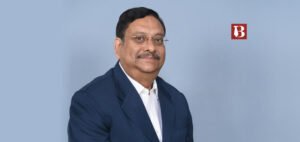
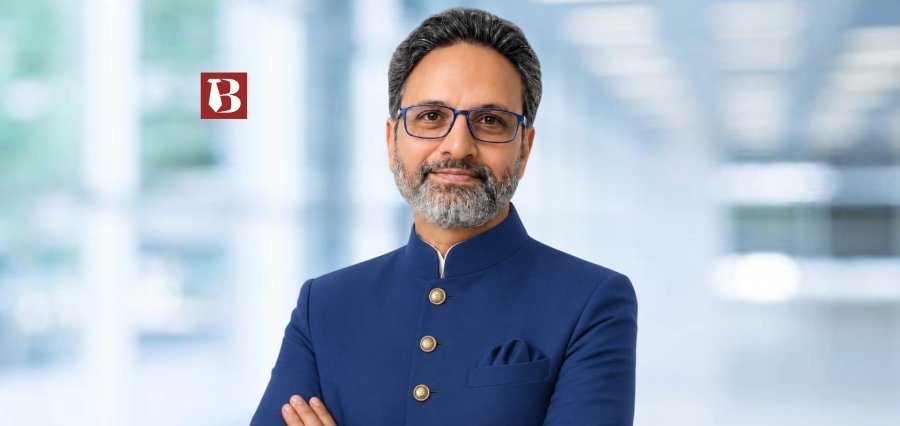
While there are human resource managers who look after people in their respective organizations, there are others who create new ways of how organizations view people altogether. Suhas Athma certainly falls into the latter category. Over 27 years of experience and through various sectors such as telecoms, pharmaceuticals, renewables and electric vehicles, he has been known as one of the most influential human resources professionals in the world. He doesn’t just manage talent; he creates organizational excellence from scratch.
Just by looking at numbers alone, his achievements speak volumes. Throughout his career, he has managed the hiring, onboarding and professional development of over 65,000 professionals. He has undertaken human resource transformation initiatives in 14 countries across the Asia-Pacific region. He has also acted as CHRO for organizations operating in the highly volatile realm of the EV and clean technology industry. But, when talking to him, the most impressive aspect of his accomplishments would be the reasoning behind them. Behind every initiative he has driven and every organization he has touched, there runs a single, unbroken thread, the belief that people, when genuinely empowered, are the most decisive force in any enterprise. As of February 2026, he serves as GCC Tech & HR Process Transformation Lead in the Multi-Industry
“Workforce excellence, for me, is the continuous pursuit of enabling people and organizations to achieve their highest potential while creating meaningful and lasting impact on society and in Multi,” he asserts
From the Ground Up
When Suhas Athma joined the professional world, HR was seen by everyone as a support function which existed to deal with administrative issues, compliance issues, and conflict resolutions. It was Suhas who realized its true value. From his very first exposure to human resources and industrial relations, he realized that this function has the power to be the biggest source of success for any organization.
It gave him an experience which not many HR professionals ever gain – an in-depth knowledge of workforce dynamics. He dealt with employees, labour union members, and management people. He went through tough negotiations. He went through all the challenges of bringing the practicality of business reality to human reality. These formative encounters instilled in him something that no classroom or certification program can manufacture — the instinct to read an organization’s human pulse before reaching for any formal tool or framework.
Based on his success in such an environment, Suhas moved up to positions of leadership in some of the most prestigious global corporations in the world. In CSC and ETS, he developed strategies for the workforce of large technology and service organizations. For Syngenta, the global agriculture business leader, he designed and implemented HR transformation projects in 14 countries in the Asia Pacific region, creating shared service organizations, re-designing people processes from scratch, and implementing enterprise technology solutions to cater to the needs of the global organization’s workforce. At Telenor, he led the digital transformation and organization re-design amidst a time of great disruption in the business, keeping people connected and aligned throughout the process.
All these positions helped him add more value as a leader. The manufacturing position taught him about discipline. The technology position taught him about speed. The consulting position taught him how to think about the organization from the outside. The agricultural and pharmaceutical industries taught him that trust was indispensable in managing employees. And finally, the EV industry, which represents the latest phase of his journey, has taught him how to create an organization almost from scratch into a well-oiled machine, while the rules of the game have yet to be written.
The CHRO as Business Leader
Suhas’s tenure as Chief Human Resources Officer in the electric vehicle and technology sector represents perhaps the most revealing chapter of his career not because the role was his most senior, but because it demanded the most complete version of him.
In a start-up-scale EV company, there is no room for a CHRO who thinks only about policies and headcount. There are no inherited systems to lean on, no established culture to preserve. Everything must be built. Leadership frameworks. Compensation structures. Digital HR infrastructure. Performance management systems. Employer brand. Succession pipelines. He built all of it, while simultaneously helping the organization scale from a small team into a large-scale enterprise capable of competing in one of the world’s most demanding industries.
“My belief is simple: success is not about keeping pace with change – it is about anticipating change, embracing it, and helping others navigate it confidently,” he declares
What made this possible, he says, was refusing to think like a traditional HR leader. He positioned himself as a business partner first and a people function head second. He sat at the strategy table, not just the HR table. He understood the company’s financial drivers, its customer challenges, its competitive pressures. And from that vantage point, he built people systems that directly served the business’s most urgent needs.
This approach, treating workforce strategy as business strategy, has defined his leadership identity across every role he has held. It is also what has earned him an unusual level of influence in the organizations he has served. When business leaders trust that their CHRO understands the P&L as well as they understand the org chart, the entire relationship between HR and the rest of the organization changes. Conversations shift. Priorities align. And the people function stops being a cost centre and starts being a growth engine.
The Human Side of Global Leadership
Few executives have managed the cultural complexity that Suhas has navigated as a matter of routine. Leading teams across India, the broader Asia-Pacific region, Europe, and global matrix organizations means contending daily with different expectations of leadership, different communication styles, different relationships to hierarchy, and different definitions of what a good workplace looks like.
His approach to this challenge is grounded in a principle that sounds simple but proves difficult to execute consistently: understand people before implementing processes. Before rolling out any new initiative in a new geography, he invests time in understanding local values, work practices, and the informal dynamics that shape how teams actually operate. He asks questions. He listens. He resists the temptation to assume that what worked elsewhere will automatically transfer.
At the same time, he refuses to allow cultural sensitivity to become an excuse for fragmentation. He creates shared visions that transcend geography common goals and a common sense of purpose that connect teams across time zones and cultural divides. The goal is not standardization for its own sake, but coherence: ensuring that every team member, wherever they are, understands how their work connects to something larger than their immediate tasks.
“I have found that when people from different backgrounds unite around a common purpose and feel genuinely valued, they can achieve extraordinary results together, regardless of geography or culture,” he says
He also empowers local leaders to make real decisions not token decisions, but decisions with genuine consequence. Ownership, in his view, is not something that can be delegated in name while being withheld in practice. When local leaders carry real authority and real accountability, they become genuine stewards of the organization’s direction, not just implementers of instructions from headquarters. It is a distinction that sounds subtle on paper but proves transformative in practice, the difference between a team that follows a strategy and a team that owns one.
Innovation as Leadership Discipline
Throughout his career, Suhas has been an early and consistent adopter of emerging technology in the human resources space. Long before AI and workforce analytics became buzzwords in the HR industry, he was implementing enterprise digital platforms, building data-driven talent management systems, and exploring how automation could free HR teams from transactional work so they could focus on higher-value strategic contributions.
At Syngenta, this meant implementing large-scale enterprise HR technology across 14 APAC countries a project that required not just technical expertise but the ability to drive change management across dozens of cultural and operational contexts simultaneously. In the EV sector, it meant building digital HR infrastructure from the ground up for an organization that did not yet have the legacy systems that most established companies take for granted.
For him, technology is not a goal in itself. It is a tool in service of a larger objective: creating organizations where people can do their best work. He is equally insistent on something that no algorithm can replicate the human judgment, relational intelligence, and genuine care for people that separates great HR leadership from competent HR management. In his view, the organizations that will lead the next decade are those that use technology to amplify human potential, not those that use it as a substitute for genuine people leadership.
“People are not merely resources, they are the greatest source of organizational value and competitive advantage,” he states
He has also been a consistent champion of diversity and inclusion- not as a compliance exercise, but as a strategic advantage. Across every organization he has led, he has built frameworks that make space for different voices, different backgrounds, and different ways of thinking. He understands, from direct experience, that diverse teams produce more creative solutions, navigate uncertainty more effectively, and build stronger cultures over time.
Recognition, Legacy and Work Ahead
The professional recognition Suhas has received over the course of his career is extensive: Most Influential Global CHRO, CHRO of the Year, HR Leader of the Year, Asia’s 100 Powerful Leaders in HR, India’s 50 Best HR Leaders, and national awards for HR Digital Transformation, Change Management, Diversity & Inclusion, and Innovation in HR, among others. He also drove his company to become the first unit outside the United States to be assessed for PCMM- People Capability Maturity Model in the APAC region, a milestone that reflected organizational seriousness about talent development at the highest level.
He acknowledges these recognitions with characteristic directness. They matter, he says, not as personal trophies but as evidence of impact, a proof that the work of transforming organizations through people is visible and valued. What matters more to him are the outcomes that awards cannot fully capture: the leaders he has mentored who now run organizations of their own, the cultures he has helped build that outlasted his tenure, the systems he put in place that continue to serve employees long after he moved on.
Looking ahead, his ambitions have expanded rather than contracted. He sees the next decade as a defining moment for the HR profession a period in which the convergence of artificial intelligence, workforce transformation, and evolving employee expectations will either elevate the people function to genuine strategic leadership or consign it to an increasingly automated support role. He intends to influence which direction the profession takes.
He plans to contribute through thought leadership, executive coaching, mentoring, and advisory work, helping organizations navigate workforce transformation, build future-ready leadership, and develop the organizational cultures needed to compete in a rapidly changing world. He is also engaged with academic institutions and industry forums, sharing insights drawn from his decades of experience across industries and geographies. For Suhas, stepping back was never part of the plan. The profession still needs leaders who can show the next generation what truly strategic people leadership looks like and he intends to be one of them.
“My vision is to leave a lasting legacy by developing leaders, strengthening organizations, and advancing the profession of workforce management globally,” he reflects
A Standard Worth Pursuing
What sets him apart from many other leaders who have achieved great status and success on account of their titles and credentials is the steadfastness with which he holds to his convictions. In 27 years, within more than two dozen organizations, and within different industries that could hardly be less alike, he continues to hold to the same central conviction that organizations produce their best outcomes not through optimizing their processes or perfecting their strategies, but by creating an environment in which people can achieve their true potential.
His convictions have formed the bedrock upon which he has taken all his decisions, built all his systems and developed all his leaders. This is not just a philosophy that informs his professional life. It is also the framework within which his whole career unfolds and within which his whole legacy is written. Suhas Athma did not simply build a career in HR. He built a case argued across 27 years, across continents, and across industries that the way an organization treats its people is not a soft concern, but the hardest business decision it ever makes.