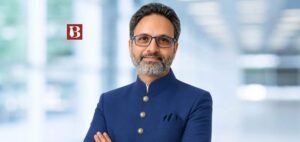
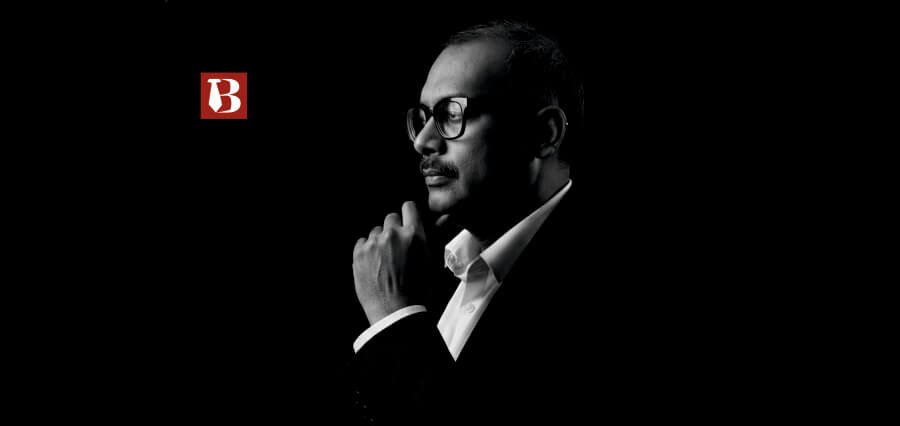
As we move into an age where medical specialization has come to be seen as being characterized by institutionally closed systems, Prof. Dr. H. V. Satish Babu is one such individual who comes to mind as an exemplary case. He is an experienced Neurosurgeon who has spent over four decades of his life dedicated to this noble profession. He is well-known for breaking barriers outside the normal limits in hospitals and cities where most people would think that such things could not be done.
He is counted among the best neurosurgeons in India, with effective leadership in institutions and humanitarianism. Educated at Karnataka Medical College, Hubli, and later Christian Medical College, Vellore, he became proficient in the discipline of neurosurgery and research, winning accolades for his research work on spinal sympathetic neurons and receiving the Best Paper Award at the Neurological Society of India meeting.
For over two decades, he has successfully organized and nurtured several neurosurgical departments as Assistant Professor and Head in Sanjay Gandhi Institute of Trauma & Orthopaedics and Dr. B. R. Ambedkar Medical College, while being a senior consultant in Mallya Hospital.
He formed a complete Department of Neurosurgery at Vydehi Institute of Medical Sciences and introduced an M.Ch. super-speciality course, which trained many neurosurgeons all over India, followed by his appointment as Director at Akash Institute of Medical Sciences, taking care of intricate administrative and development-related issues and presently works as a lead neurosurgeon and outreach coordinator throughout India and elsewhere through voluntary patient camps. Currently, he is a Medical Director and Head of Neurosciences Department, Columbiaa Hospital in Bengaluru.
The philosophy behind his exemplary work has been clearly explained by him in his own words. “Healthcare should not be a privilege reserved for urban residents. It is a fundamental right accessible to all, regardless of their geographical or economic constraints,” he says. This one concept, which he has upheld over the past four decades, has governed his actions and his decisions.
In an environment where medicine is tough, and in the best medical schools of India, he has been in the business for thirty-five years, not just doing surgery, but creating systems, teaching other doctors, and tearing down the obstacles which prevent those living in remote areas from accessing sophisticated neurological treatment. He has never deviated from his conviction, nor has he ever made a grand gesture toward this end.
The Making of a Neurosurgeon
Dr. Satish Babu’s initial years as a doctor were influenced by the educational institutions that were famed for their academic rigour and dedication to service. He obtained his MBBS degree from Karnataka Medical College, Hubli, which is an institution steeped in the public health tradition that has been developed by the western parts of Karnataka. Having developed a keen interest in surgery and academics, he then went on to do his registrar in neurosurgery from one of the best institutions in Asia, namely Christian Medical College and Hospital, Vellore, between 1992 and 1998.
Indeed, CMC Vellore made a profound impact on him in all aspects of his life. It is the spirit of excellence and social commitment that marked CMC’s tradition and became an integral part of the legacy of Dr. Satish. His dissertation research examined the localisation and arrangement of sympathetic neurons in the thoracic spinal cord segments of monkeys using the Horse Radish Peroxidase enzyme technique. The work earned him the Best Paper Award in Allied Neurosciences at the Neurological Society of India Conference in Calcutta in 1996, signalling early on that he was a physician who brought intellectual seriousness to every dimension of his field.
Building Institutions, Forming Surgeons
Few practitioners leave an institutional mark as indelible as Dr Satish Babu has across Bengaluru’s medical landscape. Since beginning his continuous clinical practice in the city in 1998, he has not merely served existing institutions; he has built and shaped them. At Sanjay Gandhi Institute of Trauma and Orthopaedics, Byrasandra, where he served as Assistant Professor and Head of Neurosurgery from 1999 to 2009.
He then led the development of the Neurosurgery and Neurotrauma Division into a functioning, capable unit. In parallel, from 2000 to 2006, he held the same headship at Dr. B.R. Ambedkar Medical College, demonstrating an extraordinary capacity for concurrent institution-building.
During his tenure at Mallya Hospital, Bengaluru, from 2001 to 2009, He sharpened his skills as a senior consultant, handling a complex caseload while establishing himself as one of the city’s dependable voices in neurosurgical care. His move to Vydehi Institute of Medical Sciences and Research Centre in Whitefield as Professor and Head of Neurosurgery from 2009 to 2013 marked a particularly consequential chapter.
There, he established the Department of Neurosurgery from inception and, critically, initiated the M.Ch Neurosurgery Super Speciality Postgraduate Training Programme, a Medical Council of India recognized programme that has since produced trained neurosurgeons practising across the country. In doing so, Dr. Satish shifted from practitioner to multiplier, ensuring that the values and skills he embodied would propagate through the next generation of the speciality.
His administrative range was further demonstrated from 2013 to 2018, when he served as Director of Akash Institute of Medical Sciences and Research Centre, Devanahalli, a 375-bedded multispecialty teaching hospital, which he was instrumental in planning, establishing, recruiting for, and operationalising. Managing regulatory relationships with the Medical Council of India, the Rajiv Gandhi University of Health Sciences, state and union health ministries, the Nursing Council, and other statutory bodies, he then navigated the complex terrain of medical institution governance with assurance and purpose.
Leading at the Frontier
Today, Dr Satish Babu holds two concurrent appointments that reflect the breadth of his professional identity. He serves as Lead Consultant Neurosurgeon and Head of the Neurosciences Division at Columbiaa Hospital, Kasturi Nagar, Bengaluru, where he oversees a comprehensive programme of neurosurgical care that serves patients from across the country as well as international cases from Southeast Asia, the Middle East, and Africa.
His clinical practice spans the full spectrum of neurosurgical intervention from complex brain tumour resections and spinal cord surgeries to emergency neurotrauma procedures. Patients who arrive at his outpatient clinics following his rural camps often discover, for the first time, that conditions they have endured for years, debilitating back pain, movement disorders, tumours pressing against critical neural structures, are operable. He has spoken candidly about the purpose these surgeries serve beyond the operating table. “Many of these surgeries are life-changing, allowing patients to resume normal lives after years of pain and immobility,” he reflects. For him, the measure of a successful intervention is not the technical execution alone but the life it restores.
To remain at the cutting edge of his craft, he pursues advanced training even in the later stages of a distinguished career. His 2020 observer ship in Neuro-intervention and Endovascular Neurosurgery at Toronto Western Hospital, Canada, and his participation in the First International Masters Class on Full Endoscopic Spine Surgery in 2022, speak to a practitioner who refuses intellectual stagnation. These are not credentials collected for their own sake. They represent techniques he subsequently applies to patients who would otherwise have to travel internationally for equivalent care.
Taking Medicine to Where It Is Needed Most
Perhaps in his outreach work, Dr Satish Babu’s character reveals itself most strikingly. On a voluntary basis, he conducts monthly neurosurgery health camps in Burdwan, Arambagh, Malda, and Murshidabad in West Bengal-districts where specialist neurological care has historically been inaccessible. He additionally runs voluntary neuro-health camps at Trust Medicals Health Centre, Maruthi Seva Nagar, in Bengaluru, serving populations with limited economic means.
These camps are not symbolic gestures. They are meticulously organized clinical operations. He collaborates with local community leaders and healthcare workers to identify areas of urgent neurosurgical need. His team establishes temporary clinics where patients, some of whom travel several miles walking, receive consultations from a specialist. For many, it is their first encounter with a neurosurgeon. For some, that encounter changes the course of their lives. Those who require surgical intervention are guided carefully through the logistics of accessing care at Columbiaa Hospital in Bengaluru, where affordability is treated not as an afterthought but as a design principle of the programme.
He extends his commitment well beyond the surgical procedure itself. He advocates actively for patient education and has spoken about the responsibility he feels toward every household his camp touches. “Counselling families about post-operative care and the prevention of neurological issues is as important as the surgery itself; the family must understand the journey: before and after,” he has noted. It is this holistic orientation treating the family as a unit of care, not merely the patient, that distinguishes his outreach model from conventional camp medicine.
Recognition Earned, Not Sought
Formal recognition of Dr Satish Babu’s contributions has followed, though he has never seemed to pursue it as an end in itself. In 2025, Asia Business Outlook recognised him as one of the Top 10 Neurosurgeons from India, an acknowledgement of both his clinical record and his institutional impact.
When communities across rural West Bengal and Bengaluru’s peripheral settlements express their gratitude, often through gestures that speak louder than words. He consistently redirects the acknowledgement. “The greatest reward lies in the smiles of my patients and the knowledge that another life has been transformed,” he says. It is a sentiment that colleagues who have worked alongside him describe as entirely genuine, untouched by the performative modesty that can sometimes accompany public recognition.
A Legacy Measured in Lives Changed
The factor that separates Dr H. V. Satish Babu from all other professionals who happen to be equally competent is the harmony between his beliefs and his deeds through an entire lifetime. He has developed departments, trained surgeons, headed hospitals, and maneuvered through government systems. He has performed brain surgery as well as fixed broken spinal cords. However, the most important deed of his is that once every month, he visits a camp in a particular district where people wait patiently for him for years together.
The healthcare system in India continues to grapple with profound inequity. The gulf between what advanced medicine can now offer and what most citizens can access. Dr. Satish Babu does not mistake his work for a systemic solution. But he refuses to let the enormity of the problem become an excuse for inaction. His view of what medicine demands of its practitioners is both simple and radical. “Compassion and expertise, when united, can break the barriers of inequality and bring hope to even the most underserved corners of society,” he observes. One camp at a time, one surgery at a time, one family counselled and one postgraduate surgeon trained, he proves that statement true.
People who know him well enough to have seen him operate in a makeshift hospital in rural West Bengal or guide a nervous family into the process of undergoing brain surgery in a new city would attest that nothing on paper does justice to all that he contributes to his calling. All that he contributes, along with the skill of his scalpel and years of experience is the conviction that every single one of his patients deserves his undivided attention, whether they come from the countryside or even if they do not earn enough.