
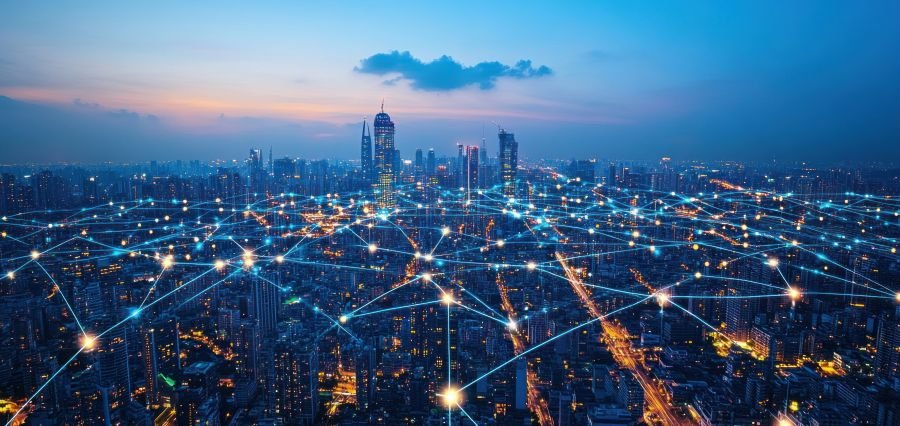
India’s cities are transforming at lightning speed. With India’s urban population likely to hit nearly 600 million in 2036, the requirements for better infrastructure, cleaner air, and good services have never been more urgent. To address this challenge, the government launched the Smart Cities Mission in 2015—a game-changing mission for enhancing urban life through technology, sustainability, and citizen engagement. And now, these Smart Cities are not only transforming how and where we live, but even the very idea of city life. The Vision Behind Smart Cities
Smart Cities Mission has been visualized with the hope to turn urban areas not only into sustainable and livable environments, but into intelligent ones too. Using information technology, infrastructure, and governance, Smart Cities will upgrade everything ranging from traffic management to garbage disposal.
It is about making cities citizen-centric and sustainable, where technology provides solutions to daily problems through data-driven technology. It could be through sensors tracking air quality, enhancing public transport, or solar-powered street lights, Smart Cities are using technology to make lasting impacts.
Technology at the Core
Advanced technology lies at the core of Smart Cities. IoT, artificial intelligence, and data analytics are used to collect and analyze data in real time. The data is then used to create informed decisions, including maximizing traffic lights to maximize traffic or predict water demand not to lag.
For example, coordinated command and control centers have been implemented in the majority of cities, which monitor more than one service—like traffic, waste, and emergencies—under one roof. Besides making it more efficient, this also makes responding to issues faster, ultimately bringing improvements in people’s lives.
Sustainability and Green Initiatives
One of the pillars of the Smart Cities ideology is sustainability. As green rot and global warming issues were taken up for discussion at the global level, the green solutions are now given high priority by these cities. Green building regulations, green energy plans, and electric buses are becoming a norm.
Solar power plants, rainwater harvesting, and energy-efficient streetlights are cutting down the carbon footprint of city life. Cities like Pune and Surat, for example, are adding greenery to their master plans, campaigning for cleaner air and improved living.
Citizen-Centric Governance
Participation by citizens is one of the common characteristics of Smart Cities. With online services and mobile apps, citizens can report civic matters, monitor orders for services, and obtain public information in real time. Participatory governance allows the needs of the people to be better served.
Also, the public opinion is largely incorporated in urban planning, thus enabling the people to become active stakeholders to the development of the city. The participatory role is generating ownership and accountability among the people.
Economic Growth and Opportunities
Urbanization to Smart Cities is also unleashing economic potential. Improved infrastructure and quality of life are pulling in business, entrepreneurs, and investors. New possibilities are emerging for startups in the area of clean energy, waste management, and mobility solutions.
Moreover, the construction and maintenance of Smart Cities also generate employment at all skill levels—technology experts developing programs to laborers building infrastructure projects. This trickle-down finances local economies and supports national growth.
Challenges on the Path to Smart Cities
While the breakthroughs are impressive, constructing Smart Cities is not an easy task. Funding sources, digital literacy, and infrastructure limitations can be deterrents. Additionally, integrating new technology into the existing infrastructure requires judicious planning and expertise human resources.
A further challenge is cybersecurity. With more cities being networked, there are greater risks of breaches and cyberattacks. Effective digital security matters for maintaining public trust and effective service delivery.
Success Stories Across India
Only a few Indian cities are already enjoying the fruits of the Smart Cities Mission. Indore, for instance, is leading cleanliness surveys currently due to the fact that it has a good waste management system. Bhubaneswar is notable by its green city design and very well-connected transportation networks. Surat has enhanced flood management through real-time monitoring.
These examples demonstrate that if there is a vision and correct implementation, Smart Cities can redefine urban living standards.
The Road Ahead
The development of all 100 designed Smart Cities is underway but the transformation is visible. As more and more cities transform to technology-driven, green, and citizen-centric approaches, India is indeed steadily working its way into a sustainable and inclusive urban future.
In the coming few years, governments, private enterprise, and citizens will have to unite to scale up the Smart Cities model. Through innovation and sustainability, India can be the world’s best example to address rapid urbanization in the proper manner.
Conclusion
Smart Cities is not just an infrastructure mission—it’s a master plan for the urban Indian lifestyle. By placing technology, sustainability, and citizen engagement at the center of their design, these cities are not just solving yesterday’s problems but designing themselves for tomorrow’s needs. As they expand and flourish, they are proof that when vision walks with innovation, city life can be transformed for the better.
Read also : MSME Powerhouses: Small Firms with High Impact in India