
Picture a manager staring at a stack of vendor proposals, each one promising to solve the same problem in a slightly different way. Most get skimmed and binned within minutes. But one document gets read properly, passed round the office, and kept open in a browser tab for days. What made the difference was not flashy design or a bold pitch. It was substance.
That document was probably what most people mean when they ask what is a white paper. It is one of the least glamorous formats in business writing, yet one of the most trusted. No bright graphics competing for attention, no exaggerated claims, just a clear explanation of a problem and a well-argued way to solve it. In a world full of noise, that plainness is exactly why people take it seriously.
This blog discusses what is a white paper, why organisations still rely on this format, and how to write a white paper that earns real trust rather than getting binned with everything else.
What Is a White Paper, in Simple Terms?
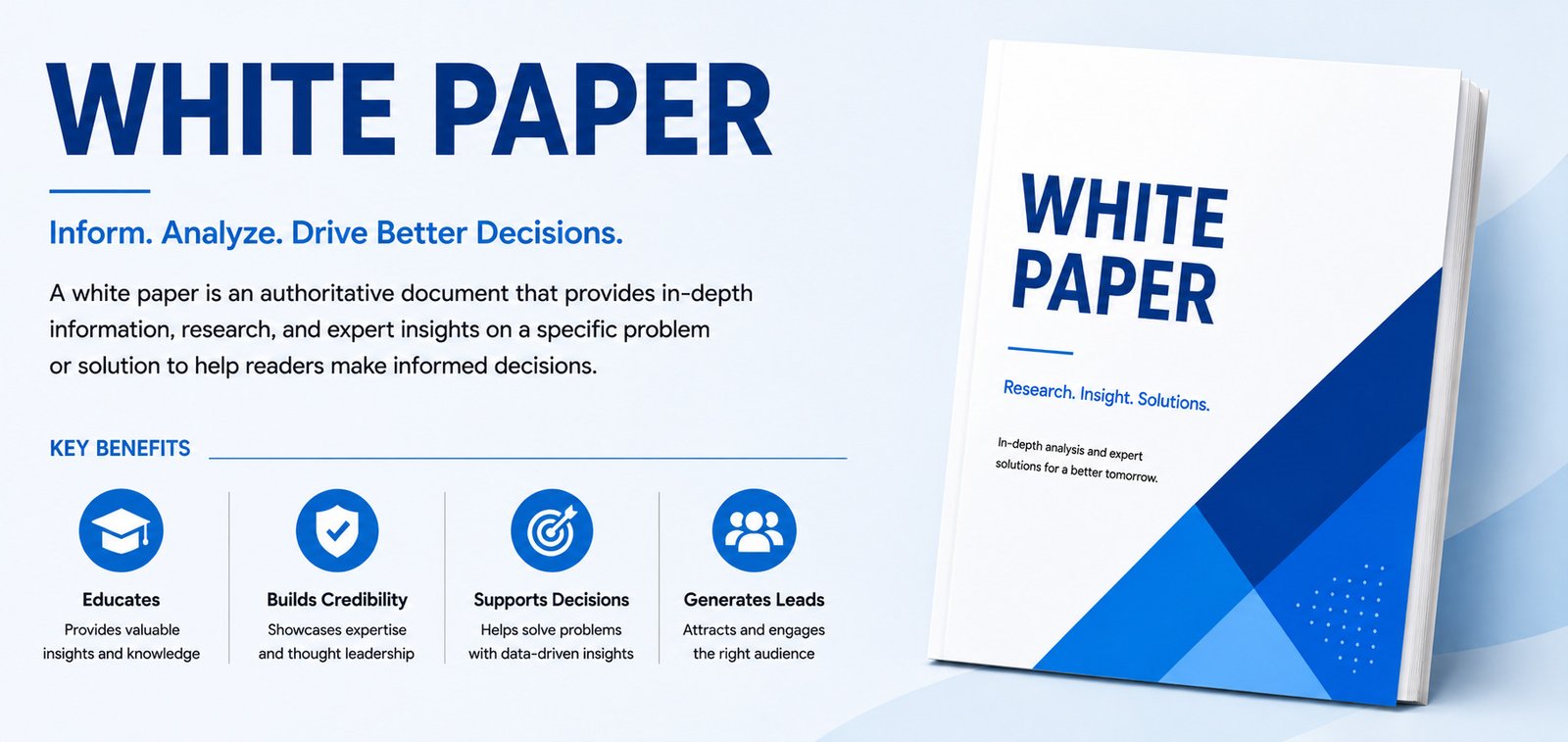
So what is a white paper, exactly? It is a detailed, research-backed document written to explain a problem and present a solution. Unlike a blog post, which stays short and conversational, it goes deeper, using data, case studies, and clear reasoning to support every claim it makes. The goal is not to entertain the reader but to inform them thoroughly enough that they feel confident making a decision afterwards.
Most documents of this kind fall into a few familiar patterns. Some explain the technical background behind a product or approach. Others are built around research findings, walking through data point by data point. A third type lays out an industry problem clearly before presenting a specific solution. Whichever structure is used, the tone stays formal, and the content stays factual throughout.
Why Businesses Still Rely on It?
In an age of short attention spans, it might seem strange that a lengthy document still holds so much weight. But that is the point. A well-written example signals that an organisation has done real thinking, not just written something quickly to fill a content calendar.
This matters most in industries where trust and expertise decide outcomes, such as finance, technology, healthcare, and manufacturing. A buyer comparing two suppliers will often trust the one who has clearly explained their reasoning over the one who made bigger promises. Understanding what is a white paper and why it carries weight helps explain why serious buyers still ask for one before deciding.
How to Write a White Paper That Actually Works?
Knowing how to write a white paper starts with the problem, not the product. Before drafting anything, it helps to revisit what is a white paper meant to achieve in the first place: informing a serious reader, not impressing them. The strongest examples open with a clear, specific issue the reader recognises immediately, then build toward a solution step by step, backed by evidence rather than opinion.
Structure matters just as much as content. Readers should never have to guess where an argument is heading. A short introduction, a clearly signposted body, and a focused conclusion keep even a lengthy document easy to follow. Anyone learning how to write a white paper for the first time should treat clarity as the primary goal, well above trying to sound impressive.
Where It Fits in the Buyer’s Journey?
Within a broader marketing plan, this kind of document usually sits near the middle or end of the buyer’s journey. Blog posts and social media attract initial interest. A longer document goes further, giving a serious reader enough detail to decide, often in exchange for their contact details through a simple download form.
This is where shorter content and long-form writing work well together. Shorter pieces bring people in. The longer document keeps them engaged once they arrive, offering depth that builds real confidence rather than a quick impression. Many teams also break a single piece of research into several blog posts afterwards, stretching its value across formats.
What Makes One Effective?
Not every long document earns the trust readers expect from a genuine example of the format. Anyone still unsure what is a white paper meant to feel like can use this as a quick test: does it teach, or does it sell? The best ones share a few clear traits. They open with a strong, specific problem statement rather than a vague introduction. They rely on evidence, not opinion, to support their argument. And they avoid sounding like a sales brochure, even though generating interest in a product or service is often the underlying goal.
Clarity matters more than length. A ten-page document that explains its point simply will always outperform a thirty-page version buried in jargon. Readers are giving up real time and attention, so anyone figuring out how to write a white paper worth reading has to respect that by staying direct throughout.
Common Mistakes to Avoid
Many organisations undermine their own document by trying to sell too hard, too soon. The moment it starts to feel like an advert, readers lose trust in everything that follows. Overly technical language causes a similar problem, shutting out readers who lack the writer’s specialist background.
Another common mistake is treating this format purely as a lead generation tool without investing proper time in the research behind it. A rushed, shallow document damages credibility faster than not publishing anything at all. Readers can tell the difference between genuine insight and padded filler almost immediately.
Conclusion: A Format Worth Trusting
Once you understand what is a white paper and why it still earns attention in a crowded content landscape, its staying power makes sense. It rewards patience, both from the writer and the reader, and delivers real value in return. For any organisation trying to build genuine credibility rather than chase quick attention, a thoughtful white paper still does something few other formats can. It proves, rather than simply claims, that the thinking behind it is sound.