Every business can succeed in the contemporary business landscape because of some basic elements: modern infrastructure, a sound financial base, access to technology, a talented workforce, and marketing. Among these, workforce or human resource management (HRM) is now arguably the most important. Furthermore, talent management is now one of the most critical aspects of HRM that often becomes the deciding difference between success and failure. Hiring the appropriate individuals, providing appropriate training, retaining top talent, and measuring work culture are all critical to business success and stable growth. However, in an increasingly competitive and expanding marketplace, hiring and retaining talent is a huge challenge. This increases the importance of an HR specialist. To effectively manage talent, organizations now rely on experts who can strategically address talent challenges. Consequently, the position of the chief human resources officer (CHRO) has emerged as a prominent and necessary function across all major business sectors in the last decade. The CHRO is the strategic core for managing an organization’s most valuable asset: its people.
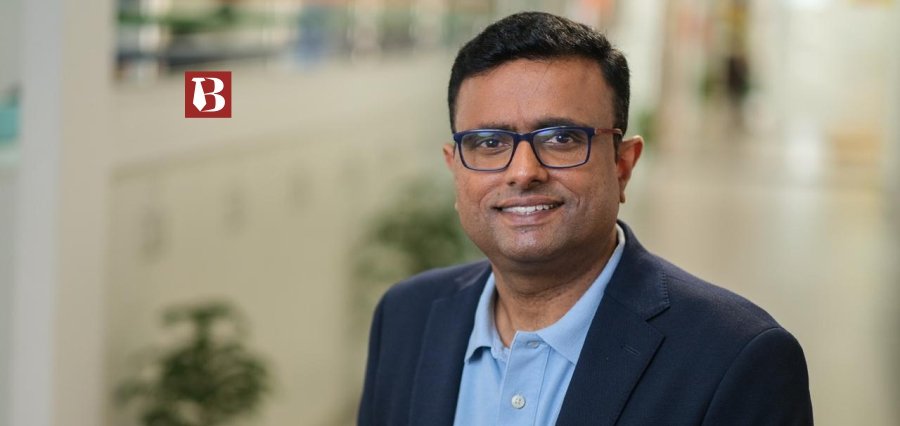
In this regard, addressing the needs of the employees with empathy and bridging the organizational objectives with workforce planning strategies, Gaurav Saini has emerged as an effective CHRO in Wadhwani Foundation, in guiding the teams towards meaningful contributions. Gaurav Saini is leading the HR function across the globe for the Wadhwani Group Foundation, a high-growth, high-tech organisation transforming lives through AI-driven solutions in the social sector. Gaurav is a reputed Global HR & Business Transformation Leader, Startups Mentor, Academics enthusiast, Board Member, and AI evangelist. He is at the forefront of building high-tech and high-performing growth organisations.
The Making of a People’s Leader
Gaurav is an established HR and business transformation leader with a core strength—understanding the business first. With over 20 years of global experience, he has a proven track record of aligning HR strategies with core business objectives across technology, IT services, financial services, FMCG, and telecom sectors. Gaurav Saini has led large-scale HR functions across 40+ countries, driving impact for over 20,000 employees in regions such as the Middle East, Africa, Europe, the Americas, LATAM, and Southeast Asia.
A key area of his expertise lies in IPO readiness from an HR perspective, having successfully led this transformation for three organizations. Gaurav Saini understands the critical role HR plays in preparing for public listing—from ensuring compliance and governance structures to enhancing talent readiness, organizational agility, and cultural alignment to meet investor expectations. His experience spans designing scalable HR frameworks, establishing robust people practices, and aligning workforce strategies with long-term business goals to support successful market entry.
Gaurav’s approach is rooted in a deep understanding of business operations, market dynamics, and growth levers. Whether it’s scaling startups, navigating complex organizational transformations, or optimizing talent strategies, he seamlessly bridges the gap between business needs and people strategies to deliver sustainable success.
Gaurav Saini specializes in building agile, high-performance organizations by combining strategic HR with business insight and AI-driven innovation. From talent management and leadership development to cultural transformation and change management, he drives initiatives that directly impact top and bottom lines.
Beyond the boardroom, Gaurav Saini actively mentors entrepreneurs, startups, and business leaders, helping them scale and thrive in an ever-evolving landscape. “My passion lies in empowering organizations to achieve their full potential by placing people at the heart of business transformation,” he shares.
Personal Philosophy
In the social sector, passion alone is not enough — it is about living the mission every single day. True impact comes when people see their roles not just as jobs but as personal commitments to a larger purpose. Gaurav’s mission-driven human capital strategy fundamentally views human resources not as a cost to be managed, but as the primary asset and strategic engine for achieving the organization’s social mission and impact. “Our strategy is built around maximizing social outcomes by deeply integrating the mission into every HR practice,” he states. The strategy includes value-based talent acquisition, impact-based performance assessment, mission reinforcement through culture, and active engagement.
Evolving Social Sector
AI and technology can scale solutions, but it is mission orientation that gives those solutions meaning and direction. The social sector in the era of AI is characterized by the use of Artificial Intelligence to drive mission scale and organizational effectiveness while confronting specialized ethical and human-focused issues, believes Gaurav.
The industry—made up of non-profits, NGOs, public sector agencies, and social enterprises—is leveraging AI to maximize resource deployment, tailor service delivery (such as in healthcare and education), and automate back-office tasks (such as grant writing and fundraising analytics), freeing up human effort for direct client interaction and strategy work, he says.
Today, the HR leadership plays a critical, human-centric role in guiding the social sector’s adoption of AI, serving as the bridge between technology and the sector’s core values of empathy, equity, and service. The senior HR teams should strategically plan the evolution of jobs to ensure AI augments (enhances) human capabilities rather than simply replacing them, especially in a sector where the “human touch” is essential, he adds.
Bridging Technology with Human Competence
Wadhwani Foundation encourages its people to embody the mission — to wake up each day knowing they are contributing to real change. Gaurav Saini shares that the cooperation between human capability and AI within a social institution must be imagined as a “Compass-and-Engine” collaboration: Human capability is the Compass (defining mission direction, bringing empathy, and making moral decisions), and AI is the engine (propelling efficiency, maximizing impact, and handling complicated information). The objective of deployment is to shift employees away from labor-intensive, repetitive work and to more high-empathy, high-leverage mission-focused work, he explains.
Ethical Frameworks
Gaurav Saini identifies that the responsibility of a CHRO is much bigger and broader than the conventional HR paradigms. As the ethical steward for AI in the workforce, he ensures that technology serves the organization’s human-centric values rather than compromising them. It calls for creating a strong governance structure that actively addresses the three fundamental ethical concerns: fairness, bias, and privacy. The CHRO needs to spearhead organizational transformation to achieve ethical AI. This involves creating an HR governance committee, revising HR policies and contracts, and developing AI literacy. Involving AI for employee surveillance, sentiment analysis, or predictive modelling is highly personal and performance-related information. AI platforms tend to be trained with past HR information, and this can infuse and continue earlier biases.
Strategies for Tech Talent Management
Gaurav Saini informs that at Wadhwani Foundation, they implement specialized strategies to attract and retain AI and data science talent who are also motivated by social impact. These professionals are often driven by purpose overpay alone, requiring a shift in the traditional Employee Value Proposition (EVP).
Instituting special internal programs, hackathons, or fellowship initiatives where AI teams can work on pro-bono or high-impact projects with non-profits or social initiatives inside the company. This enables talent to “give back” in the course of their work. Providing high levels of autonomy, which is highly prized by top tech talent, as well as the ability to work on global or cross-functional initiatives that can have maximum impact.
Gaurav Saini adds that they counterbalance the compensation package with the generous non-monetary rewards of social mission and fulfilling work. High investment in training, certifications, and postgraduate degrees in both AI/data science and ethical/social sector studies. “This shows dedication to our long-term career and purpose-driven development.”
Skill Development Initiatives
Gaurav Saini approaches upskilling the existing workforce for an AI-driven environment by deploying a human-centric, strategic, and data-driven transformation plan. The core goal is to augment human capabilities with AI, not merely replace them, ensuring no one is left behind by focusing on AI literacy and uniquely human-centric skills. “Every innovation, every policy, and every initiative we design is measured not just by efficiency but by how deeply it advances our mission.”
Culture of Innovation:
Wadhwani Foundation has a culture of adaptive learning and psychological safety, which empowers experimentation and new tech adoption without diluting the fundamental mission. The culture has three pillars: a growth mindset, human-centric change management, and responsible risk-taking. “We measure every innovation, every policy, and every initiative we create not only by efficiency but by how much it deepens our mission. We embed learning in the workflow of daily work,” says Gaurav.
Experimentation is not viewed as going off task but as an integral part of the job. Workers are encouraged to spend some portion of their time experimenting with new technologies like Generative AI tools and then disseminating those discoveries to their teams. The performance management system is modified to reward employees who take the initiative to upskill, pass new training, or spearhead small-scale technology experiments, even when the experiment does not immediately pay back in a positive business outcome. Learning agility is established as a core competency.
Measuring Impact
From Gaurav’s experience, he successfully implemented several strategies in measuring the effectiveness of the HR programs. The visible effect is seen through the increase in energy levels and enthusiasm about work. The positive feedback received from employees shows a noticeable rise. Consistency is improving, and the overall performance of the teams shows surging activity in the manager’s reports.
The Future of Work:
The most significant shift in the human capital landscape of the social sector will be the profound transformation of roles driven by Artificial Intelligence (AI) and automation, changing the workforce focus from transactional execution to high-empathy, high-impact strategy, he reveals.
This shift is not about job replacement but about job augmentation and the need for radical upskilling to preserve the uniquely human, mission-critical aspects of social work. The core of the social sector’s human capital strategy will shift from hiring for task execution to hiring and developing staff for skills that complement, rather than compete with, AI. the future social sector human capital landscape will feature a smaller, more specialized, and much more highly leveraged workforce, where human empathy is not just a soft skill, but the most valued and protected professional asset, he adds.
Transforming Challenges into Opportunities
Gaurav Saini believes that real learning happens through challenges, as it tests our problem-solving skills and resilience in demanding situations. “The biggest issues we have to contend with now are the volatility of the talent market, the nuances of contemporary work models, and having a human capital strategy tied directly to business objectives.” Meeting the challenge of retaining top talent year-round, Gaurav comments, “We go above and beyond compensation by providing competitive and flexible benefits, tailored career development plans, and a work culture that focuses on well-being and mental health. We utilize people analytics to identify the drivers of engagement and attrition in the organization, which enables us to implement targeted retention approaches.” Rather than depending only on external recruitment, he always focuses on building and deploying current capacity. This encompasses strong reskilling and upskilling initiatives to fill current and future gaps in skills.
Collaborating for Higher Success
Gaurav Saini furthers that they work closely with various businesses and social organizations to enhance their impact and exchange best practices in human capital management. These collaborations enable organizations to remain up-to-date, build talent pipelines, contribute to addressing social needs, and promote innovation. Organizations can sponsor or collaborate on joint research studies with academics on the future of work, organizational culture, leadership, people analytics, and DEI (Diversity, Equity, and Inclusion). This enables both sides to come up with innovative, data-based best practices. They put in internships, co-op opportunities, and mentorships to provide students with hands-on experience, acting as a direct recruiting pipeline for the firm. They consult university HR, business, and sometimes technical departments on skills and competencies truly required in today’s workplace. An innovative guest lecture to impart actual business know-how can support the purpose. They join or donate to executive education programs (such as those at leading business schools) in order to tap into higher-level, peer-supported learning and connect with fellow C-suite executives.
Gaurav Saini concludes, “Our ultimate goal is to build a workforce that doesn’t just support the mission — they live it, breathe it, and make it part of their identity.”